Have you ever looked at your teeth in the mirror and wished you could change their shape, colour or overall appearance? Perhaps you have chipped front teeth, stubborn discolouration, small gaps or uneven teeth that make you conscious whenever you smile.
If so, you may have come across dental veneers while researching cosmetic dental treatments.
Dental veneers in Nigeria are becoming an option for people interested in improving the appearance of their smiles. From porcelain veneers to composite veneers, these treatments can help address certain cosmetic concerns and create a more balanced, attractive smile.
However, getting veneers is not simply about choosing a shade of white and asking a dentist to transform your teeth. Your existing dental health, bite, tooth structure and expectations all matter.
Before committing to treatment, here are seven important things you should understand.
1. Understand What Dental Veneers Are and What They Can Do
Dental veneers are thin, custom-made coverings attached to the front surfaces of teeth to improve their appearance.
They are commonly used to address cosmetic concerns such as:
Stained or discoloured teeth that do not respond adequately to professional whitening.
Chipped or slightly worn teeth.
Uneven tooth shapes or sizes.
Small gaps between certain teeth.
Minor cosmetic irregularities.
Teeth with an uneven appearance.
Veneers are designed to blend with your natural smile while improving the appearance of selected teeth.
For example, someone with chipped front teeth may benefit from veneers that restore a more even appearance. Similarly, someone with stubborn discolouration may consider veneers if other suitable whitening options are unlikely to achieve the desired result.
However, veneers do not automatically straighten teeth, correct significant bite problems or treat underlying dental diseases.
It is also important to understand that veneers are different from dental crowns. While veneers generally cover the front surface of a tooth, crowns cover more of the tooth structure and may be recommended when a tooth needs greater restoration.
Understanding these differences helps you make informed decisions about cosmetic dentistry in Nigeria.
2. Know the Difference Between Porcelain and Composite Veneers
One of the first decisions you may encounter when considering dental veneers is choosing between porcelain and composite materials.
Both options can improve the appearance of your teeth, but they differ in their application, durability, maintenance and cost.
Porcelain Veneers
Porcelain veneers are thin, custom-made ceramic shells designed to fit over the front surfaces of your teeth.
They are usually manufactured in a dental laboratory before being bonded to the prepared teeth.
Some benefits include:
A natural-looking appearance that can closely resemble tooth enamel.
Good resistance to staining.
Durability when properly placed and maintained.
The ability to address several cosmetic concerns.
However, porcelain veneers generally cost more than composite veneers and may require some removal of natural tooth enamel. This preparation is usually irreversible.
Composite Veneers
Composite veneers are made using tooth-coloured resin material that is applied directly to the tooth and carefully shaped by the dentist.
The material is hardened using a special curing light and polished to achieve the desired appearance.
Some benefits include:
They may be completed in a single dental appointment.
They are generally more affordable than porcelain veneers.
They may require less tooth preparation, depending on the case.
Damaged areas can sometimes be repaired without replacing the entire veneer.
However, composite veneers are generally more susceptible to staining and wear than porcelain veneers and may require more frequent maintenance.
Porcelain vs Composite Veneers: Which Is Better?
Neither option is automatically better for everyone. The right choice depends on your dental condition, cosmetic expectations, budget and willingness to maintain the restoration.
Your dentist should explain the advantages and limitations of both options before recommending treatment.
3. Find Out If You Are a Suitable Candidate for Dental Veneers
This is one of the most important considerations before getting veneers.
Although veneers can improve the appearance of certain teeth, not everyone is a suitable candidate.
You may be considered for veneers if you have:
Healthy teeth without untreated decay.
Healthy gums without active gum disease.
Sufficient natural tooth structure to support the restoration.
Minor chips, stains or cosmetic imperfections.
Realistic expectations about the results.
However, veneers may not be the most appropriate option if you have:
Untreated tooth decay: Cavities should be treated before considering cosmetic restorations.
Active gum disease: Healthy gums are important for the long-term success and appearance of veneers.
Severe teeth grinding: People who regularly grind or clench their teeth may be at greater risk of damaging veneers.
Significant misalignment: Orthodontic treatment, such as braces or clear aligners, may be more appropriate for correcting substantial alignment problems.
Insufficient enamel: Some veneers require adequate enamel for secure bonding. If there is insufficient enamel, your dentist may recommend another treatment.
This is why dental veneers suitability must be determined through a proper clinical assessment rather than photographs or social media consultations alone.
Sometimes, a patient seeking a smile makeover may achieve a better result through professional teeth whitening, dental bonding, orthodontics or another less invasive treatment.
4. Understand the Cost of Veneers in Nigeria
Another important consideration is the veneers cost in Nigeria.
The cost of treatment can vary considerably depending on the dental clinic, the material selected, the number of teeth involved and the complexity of your case.
Some of the factors that influence the overall cost include:
Type of veneer: Porcelain veneers generally cost more than composite veneers.
Number of teeth: Treating several teeth will usually cost more than treating one or two.
Dental preparation: Additional treatments, such as fillings or gum treatment, may increase the overall cost.
Dentist’s experience: The clinician’s training and experience in cosmetic restorative dentistry are important considerations.
When comparing teeth veneers in Lagos, do not make your decision based on price alone.
A significantly cheaper offer may not necessarily include the necessary dental assessment, treatment planning, quality materials or follow-up appointments.
Ask for a breakdown of the total treatment cost and clarify whether consultation, X-rays, temporary restorations, adjustments and future maintenance are included.
Remember that the cost of veneers should be discussed following an assessment because the most suitable treatment and its requirements differ from one patient to another.
5. Know What Happens During the Veneer Treatment Process
Understanding the treatment stages can help you prepare for your appointment and know what to expect.
Although the exact process depends on whether you choose porcelain or composite veneers, treatment generally involves the following stages.
Stage 1: Dental Consultation and Assessment
Your dentist examines your teeth and gums, discusses your cosmetic concerns and assesses whether veneers are appropriate.
This may involve dental X-rays, photographs, an assessment of your bite and an evaluation of your existing tooth structure.
Any underlying dental problems should be addressed before proceeding.
Stage 2: Treatment Planning and Shade Selection
If you are suitable for veneers, your dentist discusses the treatment options, expected appearance, tooth shape and shade.
This is also an opportunity to communicate your expectations and understand what can realistically be achieved.
Stage 3: Tooth Preparation
For porcelain veneers, the dentist may remove a small amount of enamel from the front surface of the teeth to create space for the veneers.
The amount of preparation depends on your individual dental anatomy and treatment plan.
An impression or digital scan is then taken to help create veneers that fit your teeth.
For composite veneers, the dentist applies and shapes the resin material directly onto the tooth, with preparation depending on the individual case.
Stage 4: Veneer Placement
Once the custom porcelain veneers are ready, your dentist checks their fit, shape and colour before bonding them to your teeth.
Composite veneers are shaped, hardened using a curing light and polished during the appointment.
Stage 5: Final Checks and Follow-Up
Your dentist checks the appearance, comfort and bite to ensure the veneers are properly fitted.
You may need a follow-up appointment to assess how the restorations are settling and address any concerns.
The goal is not simply to make your teeth look different but to achieve an appearance that is comfortable, functional and appropriate for your dental health.
6. Understand the Risks, Limitations and Maintenance Requirements
Veneers can produce noticeable cosmetic improvements, but they are not permanent, maintenance-free solutions.
Before treatment, it is important to understand their limitations.
Tooth sensitivity: Some patients experience temporary sensitivity to hot and cold after tooth preparation.
Irreversible preparation: Traditional porcelain veneers usually involve removing some natural enamel. Once removed, this enamel does not grow back.
Chipping or cracking: Veneers can become damaged, particularly if you bite hard objects or have untreated teeth-grinding habits.
Possible replacement: Veneers may eventually need repair or replacement due to wear, damage or changes around the gumline.
Decay and gum problems: Veneers do not protect the underlying teeth from decay. The natural tooth structure around and beneath them still requires proper care.
How Do You Maintain Dental Veneers?
To help protect your investment and maintain good oral health:
Brush twice daily with fluoride toothpaste.
Clean between your teeth every day using dental floss or an appropriate interdental cleaner.
Avoid biting your fingernails, ice or other hard objects.
Avoid using your teeth to open packaging.
Discuss a protective night guard with your dentist if you grind your teeth.
Attend regular dental check-ups and professional cleaning appointments.
Contact your dentist if a veneer becomes loose, chipped or uncomfortable.
Porcelain veneers are generally more resistant to staining than composite veneers. However, good oral hygiene remains important for both.
7. Ask the Right Questions Before Committing to Treatment
Getting veneers is a decision that can affect your natural teeth for many years. Therefore, you should feel comfortable asking questions before proceeding.
Here are some important questions to discuss with your dentist:
Am I a suitable candidate for dental veneers?
Are porcelain or composite veneers more appropriate for my teeth?
Will my natural teeth need to be filed or reduced?
Are there less invasive alternatives that could achieve similar results?
What results can I realistically expect?
What are the possible risks and complications?
How much will the complete treatment cost?
How should I maintain my veneers, and what happens if one becomes damaged?
You should also confirm the dentist’s qualifications and experience in providing cosmetic dental treatment.
Be cautious of offers that promise instant smile transformations without a proper dental examination. Veneers should be planned and placed by a qualified dental professional who can assess your oral health and manage any complications.
Dental veneers can be a worthwhile option for people who want to improve specific cosmetic imperfections, such as stubborn discolouration, chipped teeth, uneven shapes or small gaps.
However, the best cosmetic dental treatment is not necessarily the one that changes your smile the most. It is the one that addresses your concerns while protecting your natural teeth and supporting your long-term oral health.
For some people, veneers may be appropriate. For others, teeth whitening, composite bonding, orthodontic treatment or another dental procedure may provide a better solution.
The important thing is to understand your options before making a decision.
Transform Your Smile with the Right Dental Advice at TeethMinder Dental Clinics
Thinking about getting dental veneers in Nigeria? Before committing to treatment, take the time to understand your dental needs and explore the options available.
At TeethMinder Dental Clinics, we believe that every smile deserves proper attention and personalised dental care. Our dental team can assess your oral health, discuss your cosmetic concerns and help you understand the treatments that may be suitable for you.
Whether you are considering veneers or exploring other cosmetic dentistry options, the first step is a professional dental consultation.



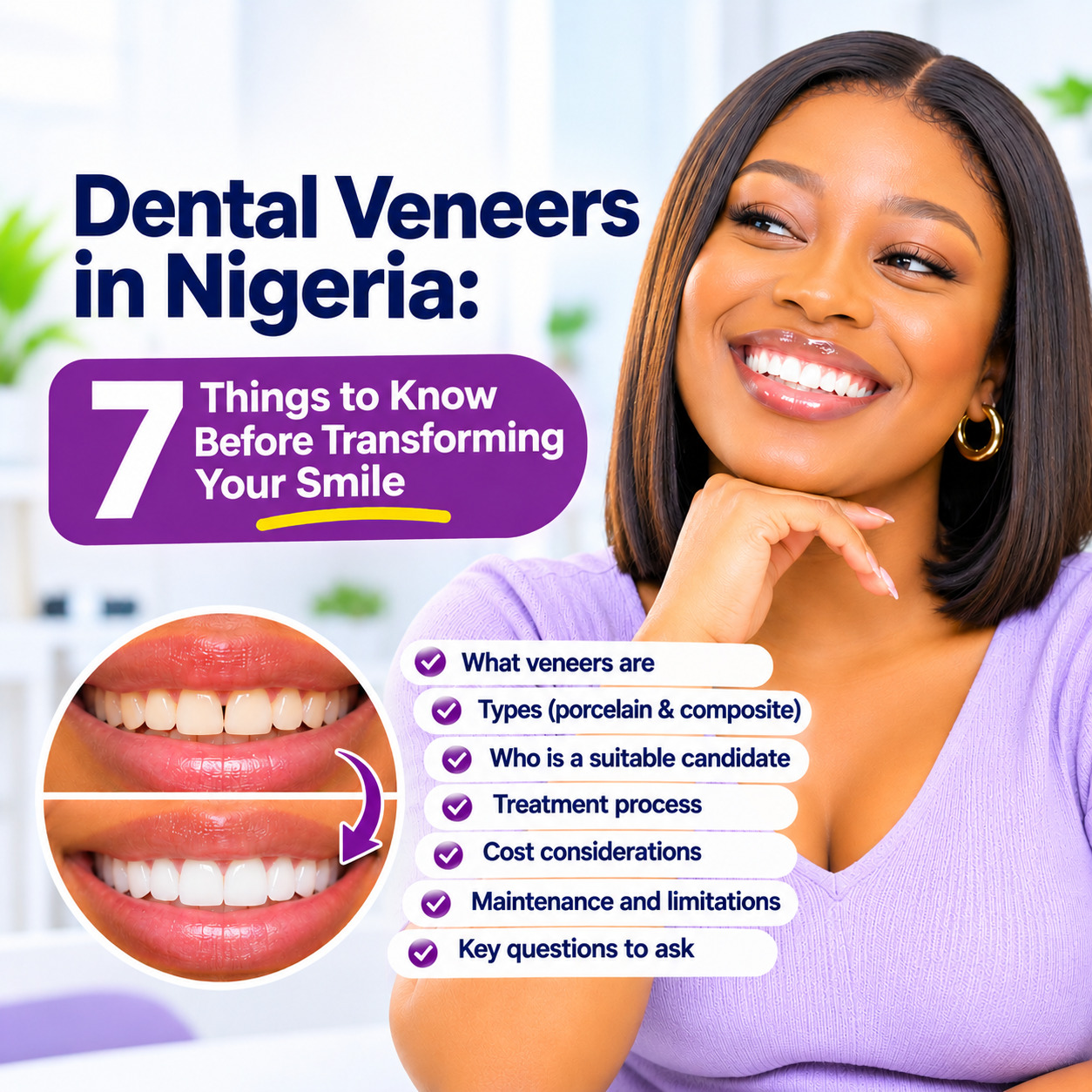
Dental Veneers in Nigeria: 7 Things to Know Before Transforming Your Smile
Have you ever looked at your teeth in the mirror and wished you could change their shape, colour or overall appearance? Perhaps you have chipped front teeth, stubborn discolouration, small gaps or uneven teeth that make you conscious whenever you smile.
If so, you may have come across dental veneers while researching cosmetic dental treatments.
Dental veneers in Nigeria are becoming an option for people interested in improving the appearance of their smiles. From porcelain veneers to composite veneers, these treatments can help address certain cosmetic concerns and create a more balanced, attractive smile.
However, getting veneers is not simply about choosing a shade of white and asking a dentist to transform your teeth. Your existing dental health, bite, tooth structure and expectations all matter.
Before committing to treatment, here are seven important things you should understand.
1. Understand What Dental Veneers Are and What They Can Do
Dental veneers are thin, custom-made coverings attached to the front surfaces of teeth to improve their appearance.
They are commonly used to address cosmetic concerns such as:
Veneers are designed to blend with your natural smile while improving the appearance of selected teeth.
For example, someone with chipped front teeth may benefit from veneers that restore a more even appearance. Similarly, someone with stubborn discolouration may consider veneers if other suitable whitening options are unlikely to achieve the desired result.
However, veneers do not automatically straighten teeth, correct significant bite problems or treat underlying dental diseases.
It is also important to understand that veneers are different from dental crowns. While veneers generally cover the front surface of a tooth, crowns cover more of the tooth structure and may be recommended when a tooth needs greater restoration.
Understanding these differences helps you make informed decisions about cosmetic dentistry in Nigeria.
2. Know the Difference Between Porcelain and Composite Veneers
One of the first decisions you may encounter when considering dental veneers is choosing between porcelain and composite materials.
Both options can improve the appearance of your teeth, but they differ in their application, durability, maintenance and cost.
Porcelain Veneers
Porcelain veneers are thin, custom-made ceramic shells designed to fit over the front surfaces of your teeth.
They are usually manufactured in a dental laboratory before being bonded to the prepared teeth.
Some benefits include:
However, porcelain veneers generally cost more than composite veneers and may require some removal of natural tooth enamel. This preparation is usually irreversible.
Composite Veneers
Composite veneers are made using tooth-coloured resin material that is applied directly to the tooth and carefully shaped by the dentist.
The material is hardened using a special curing light and polished to achieve the desired appearance.
Some benefits include:
However, composite veneers are generally more susceptible to staining and wear than porcelain veneers and may require more frequent maintenance.
Porcelain vs Composite Veneers: Which Is Better?
Neither option is automatically better for everyone. The right choice depends on your dental condition, cosmetic expectations, budget and willingness to maintain the restoration.
Your dentist should explain the advantages and limitations of both options before recommending treatment.
3. Find Out If You Are a Suitable Candidate for Dental Veneers
This is one of the most important considerations before getting veneers.
Although veneers can improve the appearance of certain teeth, not everyone is a suitable candidate.
You may be considered for veneers if you have:
However, veneers may not be the most appropriate option if you have:
Untreated tooth decay: Cavities should be treated before considering cosmetic restorations.
Active gum disease: Healthy gums are important for the long-term success and appearance of veneers.
Severe teeth grinding: People who regularly grind or clench their teeth may be at greater risk of damaging veneers.
Significant misalignment: Orthodontic treatment, such as braces or clear aligners, may be more appropriate for correcting substantial alignment problems.
Insufficient enamel: Some veneers require adequate enamel for secure bonding. If there is insufficient enamel, your dentist may recommend another treatment.
This is why dental veneers suitability must be determined through a proper clinical assessment rather than photographs or social media consultations alone.
Sometimes, a patient seeking a smile makeover may achieve a better result through professional teeth whitening, dental bonding, orthodontics or another less invasive treatment.
4. Understand the Cost of Veneers in Nigeria
Another important consideration is the veneers cost in Nigeria.
The cost of treatment can vary considerably depending on the dental clinic, the material selected, the number of teeth involved and the complexity of your case.
Some of the factors that influence the overall cost include:
When comparing teeth veneers in Lagos, do not make your decision based on price alone.
A significantly cheaper offer may not necessarily include the necessary dental assessment, treatment planning, quality materials or follow-up appointments.
Ask for a breakdown of the total treatment cost and clarify whether consultation, X-rays, temporary restorations, adjustments and future maintenance are included.
You can also explore the TeethMinder Dental Clinics price list to learn more about the clinic’s listed dental services.
Remember that the cost of veneers should be discussed following an assessment because the most suitable treatment and its requirements differ from one patient to another.
5. Know What Happens During the Veneer Treatment Process
Understanding the treatment stages can help you prepare for your appointment and know what to expect.
Although the exact process depends on whether you choose porcelain or composite veneers, treatment generally involves the following stages.
Stage 1: Dental Consultation and Assessment
Your dentist examines your teeth and gums, discusses your cosmetic concerns and assesses whether veneers are appropriate.
This may involve dental X-rays, photographs, an assessment of your bite and an evaluation of your existing tooth structure.
Any underlying dental problems should be addressed before proceeding.
Stage 2: Treatment Planning and Shade Selection
If you are suitable for veneers, your dentist discusses the treatment options, expected appearance, tooth shape and shade.
This is also an opportunity to communicate your expectations and understand what can realistically be achieved.
Stage 3: Tooth Preparation
For porcelain veneers, the dentist may remove a small amount of enamel from the front surface of the teeth to create space for the veneers.
The amount of preparation depends on your individual dental anatomy and treatment plan.
An impression or digital scan is then taken to help create veneers that fit your teeth.
For composite veneers, the dentist applies and shapes the resin material directly onto the tooth, with preparation depending on the individual case.
Stage 4: Veneer Placement
Once the custom porcelain veneers are ready, your dentist checks their fit, shape and colour before bonding them to your teeth.
Composite veneers are shaped, hardened using a curing light and polished during the appointment.
Stage 5: Final Checks and Follow-Up
Your dentist checks the appearance, comfort and bite to ensure the veneers are properly fitted.
You may need a follow-up appointment to assess how the restorations are settling and address any concerns.
The goal is not simply to make your teeth look different but to achieve an appearance that is comfortable, functional and appropriate for your dental health.
6. Understand the Risks, Limitations and Maintenance Requirements
Veneers can produce noticeable cosmetic improvements, but they are not permanent, maintenance-free solutions.
Before treatment, it is important to understand their limitations.
Tooth sensitivity: Some patients experience temporary sensitivity to hot and cold after tooth preparation.
Irreversible preparation: Traditional porcelain veneers usually involve removing some natural enamel. Once removed, this enamel does not grow back.
Chipping or cracking: Veneers can become damaged, particularly if you bite hard objects or have untreated teeth-grinding habits.
Possible replacement: Veneers may eventually need repair or replacement due to wear, damage or changes around the gumline.
Decay and gum problems: Veneers do not protect the underlying teeth from decay. The natural tooth structure around and beneath them still requires proper care.
How Do You Maintain Dental Veneers?
To help protect your investment and maintain good oral health:
Porcelain veneers are generally more resistant to staining than composite veneers. However, good oral hygiene remains important for both.
You can read more about veneer care and treatment considerations from the American Dental Association’s guide to veneers.
7. Ask the Right Questions Before Committing to Treatment
Getting veneers is a decision that can affect your natural teeth for many years. Therefore, you should feel comfortable asking questions before proceeding.
Here are some important questions to discuss with your dentist:
You should also confirm the dentist’s qualifications and experience in providing cosmetic dental treatment.
Be cautious of offers that promise instant smile transformations without a proper dental examination. Veneers should be planned and placed by a qualified dental professional who can assess your oral health and manage any complications.
The American Dental Association’s safety guidance also highlights the risks associated with unsupervised veneer procedures.
Are Dental Veneers Worth It?
Dental veneers can be a worthwhile option for people who want to improve specific cosmetic imperfections, such as stubborn discolouration, chipped teeth, uneven shapes or small gaps.
However, the best cosmetic dental treatment is not necessarily the one that changes your smile the most. It is the one that addresses your concerns while protecting your natural teeth and supporting your long-term oral health.
For some people, veneers may be appropriate. For others, teeth whitening, composite bonding, orthodontic treatment or another dental procedure may provide a better solution.
The important thing is to understand your options before making a decision.
Transform Your Smile with the Right Dental Advice at TeethMinder Dental Clinics
Thinking about getting dental veneers in Nigeria? Before committing to treatment, take the time to understand your dental needs and explore the options available.
At TeethMinder Dental Clinics, we believe that every smile deserves proper attention and personalised dental care. Our dental team can assess your oral health, discuss your cosmetic concerns and help you understand the treatments that may be suitable for you.
Whether you are considering veneers or exploring other cosmetic dentistry options, the first step is a professional dental consultation.
Visit TeethMinder Dental Clinics at:
Call: 0810 492 2070
Website: www.teethminder.com
Book a dental consultation today and take an informed step towards a healthier, more confident smile.
Archives
Categories
Recent Posts
Recent Comments
Archives
Categories
Meta
Calendar